






No caps on dreams
by Trey Nosrac
No matter what the future holds for our sport or how harness racing evolves, an essential ingredient is retaining an elite tier of racing, a Grand Circuit. Whatever minor leagues, private leagues, or other business models evolve for racing horses, they must offer horses and their owners a path to reach the pinnacle.
* * *
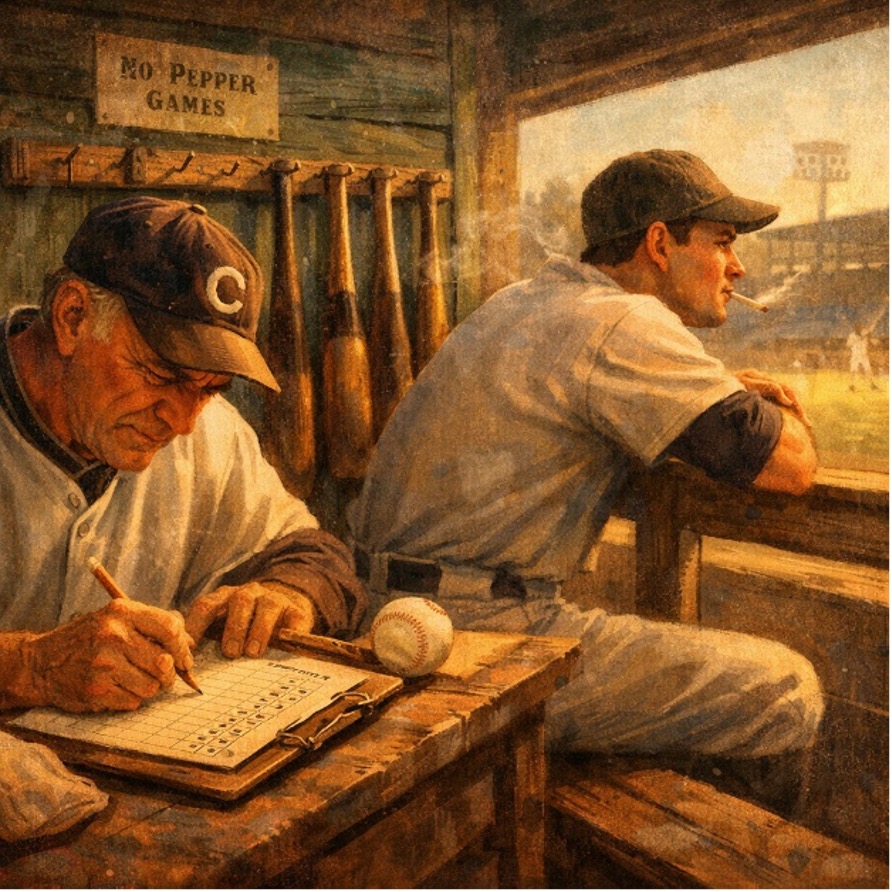
An hour before the first pitch, on a warm June evening in the year 2005, the manager of the Chillicothe Paints, then a member of the Frontier League of Professional Baseball, sat in the weathered wooden dugout of Memorial Stadium, penciling in his lineup card.
He looked up and said, “The kid pitching against us tonight is really good. Might be another Brian Tollberg.”
“Who’s Tollberg?” I asked.
“First Frontier League player to make it to the majors. Climbed the ladder with the Padres organization.”
He nodded his head toward the mound, “From here to there, amazing. And here’s the weird thing: Major League Baseball called up another of our kids, Morgan Burkhart, two weeks later. He made it, too.”
“Weren’t they under contract with the league?” I asked.
“Wasn’t a problem. The franchise got some money to pay the bills, and nobody wants to stand in the way of a dream. Everyone in this little baseball universe knows the stories about the players who made the impossible possible.”
* * *
So, what does that little vignette have to do with harness racing?
The story illustrates something we have in harness racing, and that we should retain at all costs — the ability for an overlooked player (horse) to rise from the lowest rung to the top. This might sound like a footnote. It isn’t. The dream is the heart and soul of sports at every level. The same dynamic is alive when someone buys a harness racing yearling.
You may hear an owner say, “I bought this filly just to fool around with. I’m hoping she makes it to a county fair.” That is a big, beautiful lie. Every person walking out of a yearling sale believes the Hambletonian is on the table. And once in a great while, that dream becomes real.
From a business standpoint alone, in whatever sporting model evolves, hard caps should be avoided. It is essential to keep even the smallest sliver of hope alive. Here is how that mindset could work in a model suggesting a private league for our sport.
Management assembles a catalog of roughly 120 yearlings. A Rewards for Maintenance and Participation Fund (RMPF) is established. There is an auction for this pool of young horses. The auction, training, and racing occur at a single location. This is a system where expenses and rewards are capped.
Now step into the mind of a bidder.
He or she studied the catalog, cross-referenced pedigrees and performance lines, and narrowed the field for bidding to five prospects. Let’s call our customer Raymond. Raymond believes HIP #46 is the best horse in the book, the biggest fish in this small pond of racing prospects.
The math is straightforward. Two and a half seasons of RMPF cost $40,000, plus the auction price. The parameters are clear: 10-horse barns, weekly races, randomly assigned trainers, staff veterinarians only, approved medications only, a half-mile track, and one trainer/driver per barn.
What is the owner racing his horse for?
Each season, the five best individual horses compete in a $100,000 championship. Another $200,000 in RMPF is divided among the top three team barns. That is the baseline. If HIP #46 proves to be the best individual horse and leads his team to the title in both seasons, he could earn close to $150,000 over two years. That may not be spectacular by Sires Stakes standards, but it is meaningful. There are trophies. There are blankets. And never underestimate bragging rights.
Suppose Raymond buys HIP #46 for $21,000. Add the $40,000 maintenance investment, and he is in for a maximin of $61,000. Raymond has studied the horse. He creates a group of 10 to join him on the adventure. He and his pals understand the structure. They know the competition. For around six grand, each person can take quite a ride.
Now comes the sweetener – improbable, but important.
What if Raymond (and his crew) are right about this yearling? What if it quickly becomes obvious that HIP #46 is simply too good for this pool, the young colt is trotting training miles that hint at something more?
Hip #46 must be nominated to the National Stakes Program. Raymond would have a window and the opportunity to continue the national nominations. He could request an opt-out from the league.
That request would almost certainly be approved.
The harness racing league does not benefit from a runaway superstar. When a dominant horse exits the pool of competitors, every remaining horse moves up a rung. Competition tightens. The corporation retains its structured investment. In effect, in some rare instances, Raymond must choose: be a big fish in our pond or swing for the fences elsewhere. He cannot do both.
This is why any league should begin with a surplus of horses. Replacements wait in the paddock. A lightly fluid pool, not a static one, adds intrigue. A late-developing “wonder horse” has an escape hatch.
That narrow window — improbable, not impossible — matters.
Independent baseball understands this; other entertainment and sporting organizations realize this. Undrafted players or unknown players sign wherever they can, begin competing in rebel leagues, and chase a dream that borders on absurd. The odds are astronomical. And yet, once in a while, a sharp eye notices. A contract is purchased. A ladder appears.
I have seen it happen.
Any harness racing model must preserve that same hope. Because in sport, and in the marketplace, the difference between improbable and impossible is everything.
Stay on top of all harness racing news.
Join the HRU mailing list, free.