




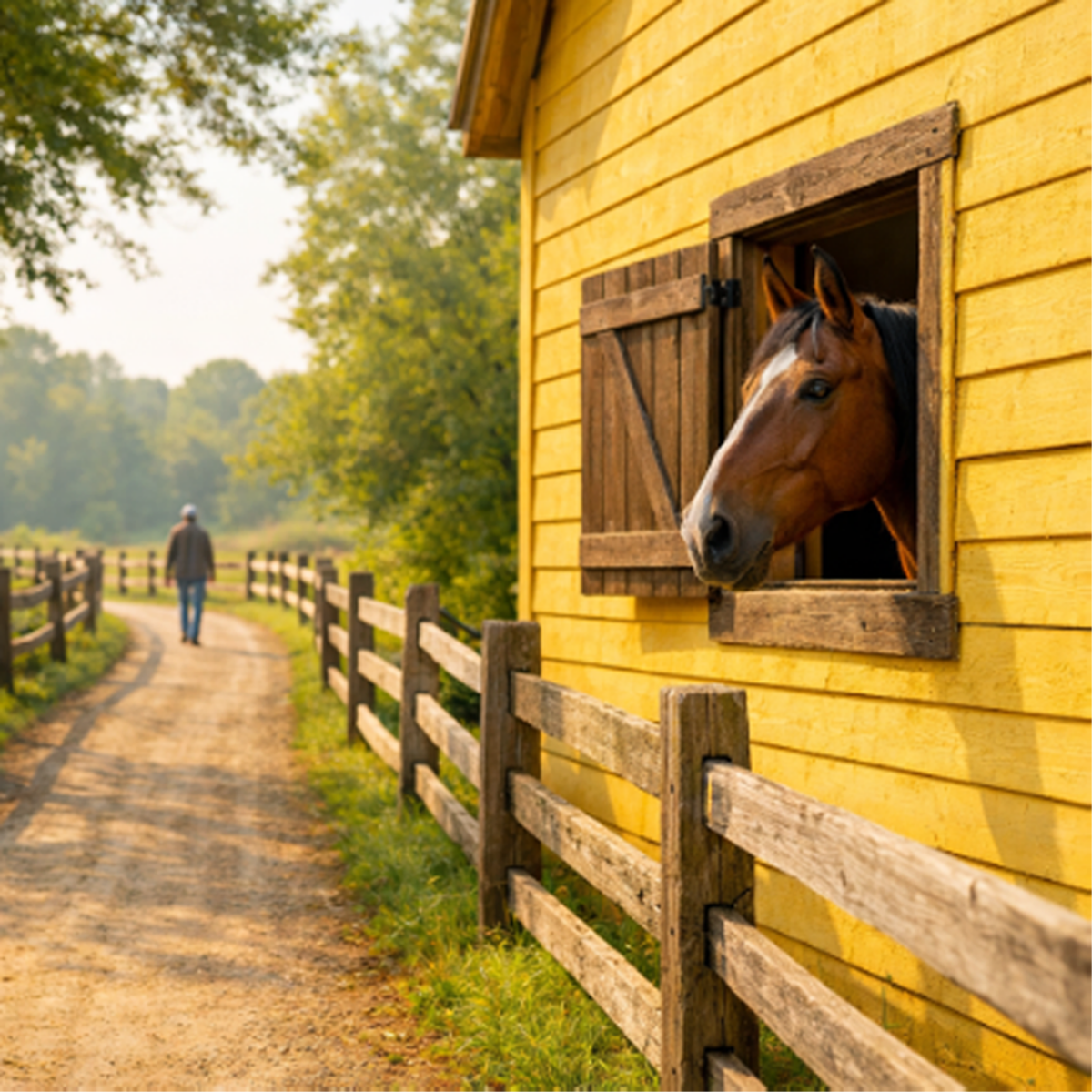
Inside the yellow barn
by Trey Nosrac
Once upon a time, a fledgling teacher/coach, working in one of the largest school districts in the county, was involved in the decision to start an intramural football program for sixth graders. The response was overwhelming. More than 100 boys signed up, some dreaming of touchdowns, others just hoping to impress a girl or two. The structure of that program has stayed with me.
We divided the group into equal teams. I don’t remember if there were four or six teams, but for our purposes, let’s call it six. We asked the physical education teachers to identify the top dozen athletes on the list. Those 12 promising all-stars were carefully distributed, two to each team, so no one roster started with an advantage.
The rest of the names went into a hat. That was it. No recruiting. No politics. No parents lobbying for better placement. Just a fair shake.
Each coach received a roster of about 20 players, a small mountain of well-worn football uniforms, a patch of grass to practice on, and a schedule with games on Thursdays at 4 o’clock. We practiced, we played, and we made sure everyone got a chance to participate in the game. Something interesting happened. The pressure never arrived.
The games mattered, but not too much. The coaches cared, but not too much. The kids competed, but they also laughed, learned, socialized, and improved. Some players went on to bigger things. Some coaches climbed the ladder. But let me report, none of us ever enjoyed coaching quite like we did on those fall afternoons.
Once you moved up, the noise came with you. Scholarships. Playing time. Transfers. Looking for an edge. Boosters. Parents. Money. Winning stops being part of the experience and starts becoming the point.
What does a group of 12- and 13-year-old students on dusty old football fields have to do with 1,200-pound racehorses and gambling?
I’m not sure, but that intramural experience came back to me when I began thinking and writing about redirecting some portion of our sport to building something different, private, contained, balanced, and intentional.
If you are new to these scribbles, imagine this – pools of similarly talented horses. There are no super barns. No stacking the deck. No endless veterinarian work to grab an edge or keep a horse on the track. Horses in the pools are leased and randomly assigned to 10-horse barns, each barn a different color. Inside each barn is a trainer, a driver, and a groom. The inputs are controlled – the same veterinarians, blacksmiths, feed, and environment. The horses never leave the campus.
Now pause and look at it from other angles.
From the trainer’s perspective: no arms race, no chasing million-dollar owners or horses, no nonstop shipping of horses. Horse training becomes more of a daily job, doing what you love. From the owner’s perspective: defined costs and defined opportunity, and an opportunity to spend more time with your horse. From the sport’s perspective: a fresh, wholesome vibe. There is no crushing burden on anyone to win or go broke.
Veterans of racing horses will find a gentler environment, and recruits to the sport can ease into the game. You can follow a barn, a horse, a friend’s horse, and talk to the participants. In a world like this, the pressure doesn’t disappear completely; it resets.
In that intramural football league so many years ago, the best athletes still stood out. The competitive fire still burned. If we find a business model that can transfer these principles to harness racing, we could create an environment that allows people to stay in the game. Participants could discover that improvement, competition, and fairness are fun. Not to mention the most profound change of all, our magnificent horses, the hub of the wheel, our greatest asset, will be much more accessible to the public.
Maybe a better model for our future is owning a young racehorse in that yellow barn of your imagination. And if you’re wondering whether grown men and women would embrace something that simple, we will never know unless someone tries and opens the barn door.
Stay on top of all harness racing news.
Join the HRU mailing list, free.