


Founders wanted
by Trey Nosrac
Creativity is imagining something different. Innovation is building it.
Screenwriters turn an idea into a film. Entrepreneurs create and market niche products. Developers create communities. New businesses spring up like flowers in the springtime. Harness racing could use a few folks who see opportunity instead of obstacles.
Watching teams grow in the niche sport of independent professional baseball was fascinating. After a decade involved in the sport, I found that entrepreneurs built franchises in dramatically different ways.
Obviously, baseball teams needed two things: a place to play and an ownership structure. There were no templates in the independent baseball world, so the results varied. A “Field of Dreams” was launched by a wealthy person who purchased a franchise, secured land, and built a stunning ballpark complex out of his own pocket. At the other extreme, a few friends leased a high school field surrounded by cornfields and paid monthly rent.
In between the two extremes were historic parks revived for rehabilitation, abandoned stadiums repurposed, shared municipal complexes, and upgraded college facilities. My favorite home field, where I spent a few seasons, was a jewel of a World War II-era stadium nestled on the rolling, park-like grounds of a Veterans Home.
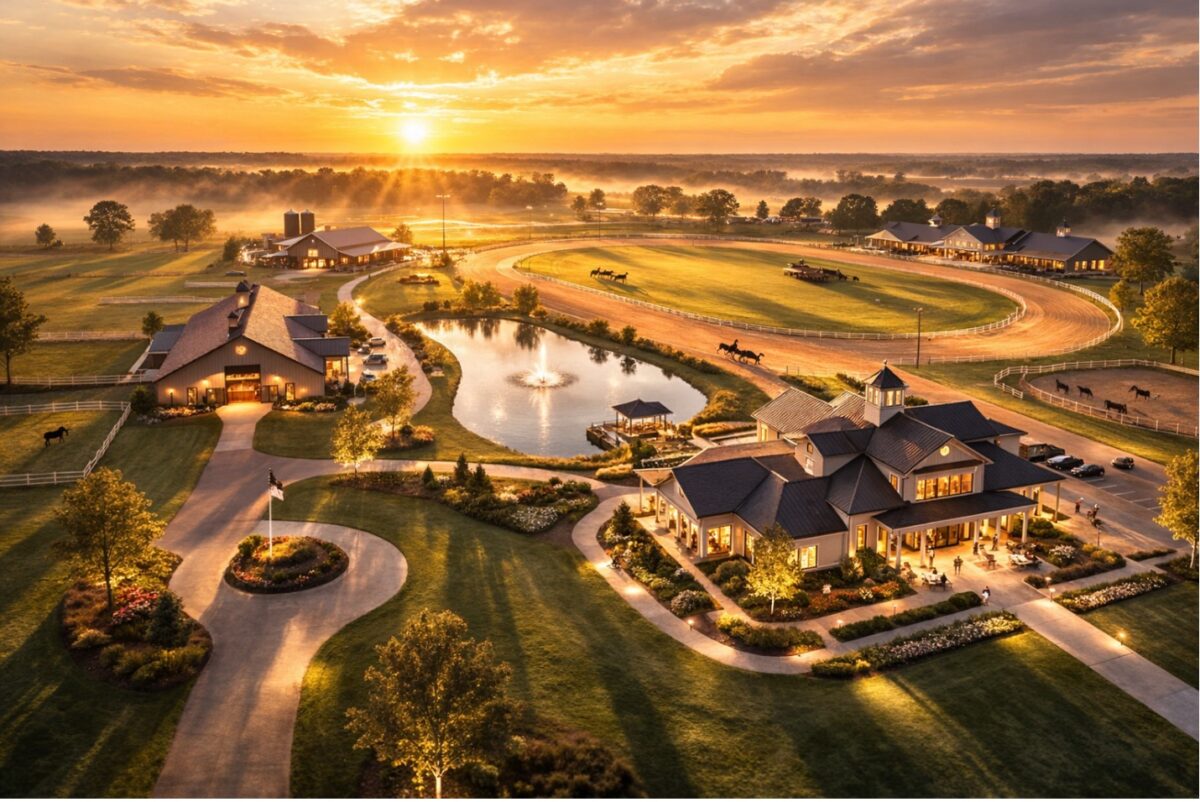
We also have many options if we dare to imagine a racing facility to host a new vision for harness racing.
Virgin territory in a state without legalized gambling or a harness racing footprint would be the best path. A non-gambling state offers entrepreneurs a clean slate — and an exotic product. A few baseline considerations seem essential: a warm southeastern climate, a buffer of 20 miles from a major city, and a cooperative county government.
After those fundamentals, the ownership structure will determine nearly everything else.
When Leland Stanford wrote checks for his Shangri-La for trotters, cost was not a constraint. His majestic breeding and training operation was a passion project that brought him enormous satisfaction until the day he died, sitting on his porch watching horses trot.
Perhaps among the 75,000 to 150,000 registry members of North American harness racing organizations, there is a billionaire who loves this sport enough to follow in the hoofprints of the titans of trotting and pacing. One deep-pocketed patron could build a private, grand facility to exact specifications. At the opposite end of the spectrum, a handful of determined horsemen with modest capital could acquire a struggling training center and build something practical, efficient, and horse-first.
Let’s consider a number of ownership models:
• THE SINGLE PATRON (THE LELAND STANFORD MODEL):
One wealthy benefactor funds the complex as a legacy passion project and builds a flagship facility that becomes a beacon for the sport.
• THE HORSEMEN SYNDICATE:
A dozen trainers and breeders dissatisfied with the sport’s trajectory pool resources to build a functional, growth-oriented campus.
• THE MEMBER COOPERATIVE:
Dozens — perhaps hundreds — buy in, elect leadership, and share governance and benefits. The facility becomes a true participation-centered community.
• THE MUNICIPAL PARTNER:
A town or county owns the land, leases operations, and develops a multi-use destination with harness racing as the anchor tenant.
• THE HOSPITALITY DEVELOPER:
A resort or event operator builds the experience first, including hotels, dining, and recreation, with horses and harness racing as the featured attraction.
• THE BREEDER ALLIANCE:
Farms establish a southern base to develop and showcase stock year-round. The facility becomes a proving ground for their pipeline.
• THE MISSION-DRIVEN/NONPROFIT MODEL:
Racing supports a larger purpose — youth development, veterans programs, and equine therapy — attracting grants, donors, and goodwill beyond traditional racing economics.
• THE INVESTOR MODEL:
Here, the backer views the project as a primary business designed to generate profit. Racing and purses are not the sole revenue engine; they are part of a larger destination economy, including memberships, hospitality, events, training services, real estate, sponsorship, media content, and tourism. In this model, the track is the anchor tenant, but the campus is the enterprise.
The creator’s vision and financial structure define the scope and location of the project. You may see something entirely different than your neighbor. You might blend two or three of these formats. You might swing for the fences. Or you might lay down a strategic bunt.
My personal inclination? A dead heat, or better yet, a hybrid.
• MUNICIPAL PARTNERSHIP:
Across the Southeast are rural towns and counties searching for sustainable growth industries. A new sporting and recreational facility offers a low-cost, high-visibility opportunity. It creates construction jobs, year-round activity, and civic pride. And frankly, working alongside small communities feels right for a sport built on relationships.
• HORSEMEN/BREEDER SYNDICATE:
A tight investor group, lean management team, and governing board establish a purpose-built campus – perhaps in Colleton County, SC. Even scanning a map and imagining potential sites is energizing.
Are you a creator ready to take a swing?
Next week, we’ll explore what we gain and what we leave behind, building a league of our own.
Stay on top of all harness racing news.
Join the HRU mailing list, free.