






The team play
by Trey Nosrac
My ringtone sprang to life. Everyone on my ID has a nickname. Jason Williams is my ex-roommate, ex-brother-in-law, ex-horse partner, and the regional director of a national insect extermination business, so he shows up on my screen as Mr. X.
“Trey speaking.”
“Read your last one about buying slightly-used harness horsesfor resale and then using them in some sort of private racing scheme.”
“Scheme is a bit harsh. Let’s go with the term, Innovative Business Plan.”
“As usual, the idea is loopy. But to be honest, your concept of relativity didn’t make me barf on my boots.”
“High praise from Mister X.”
“Say I bought one of these 100 rejects. What’s next, and more importantly, what can I expect money-wise?”
“C’mon, X, you don’t need money. You’ve flushed big bucks on bad yearlings, without denting your mint. In this Innovative Business Plan, you don’t own the horse. The papers for all 100 horses stay with the corporation; it’s more like a lease-to-own contract. After two years, you can take the horse home if you want.”
“Okay, so what happens during my lease? Give me some numbers.”
“Very simple, your cost is the price you paid for the horse plus $36,000 for the two-year lease. If you pay $8,000 at the auction, the tab is $44,000, which includes training, shipping, vet work, etc. It’s a flat fee, but your total tab will be lower. At the end of the second racing season, one option is to put the horse back on the market. So, in this case, the outlay is less than $40,000.”
“What can I earn?”
“The best individual trotter of the bunch will earn $125,000. That’s a bottom number; the ceiling may be more. It’s complicated, and I’ll get to that later.”
“What’s this BS about a team?”
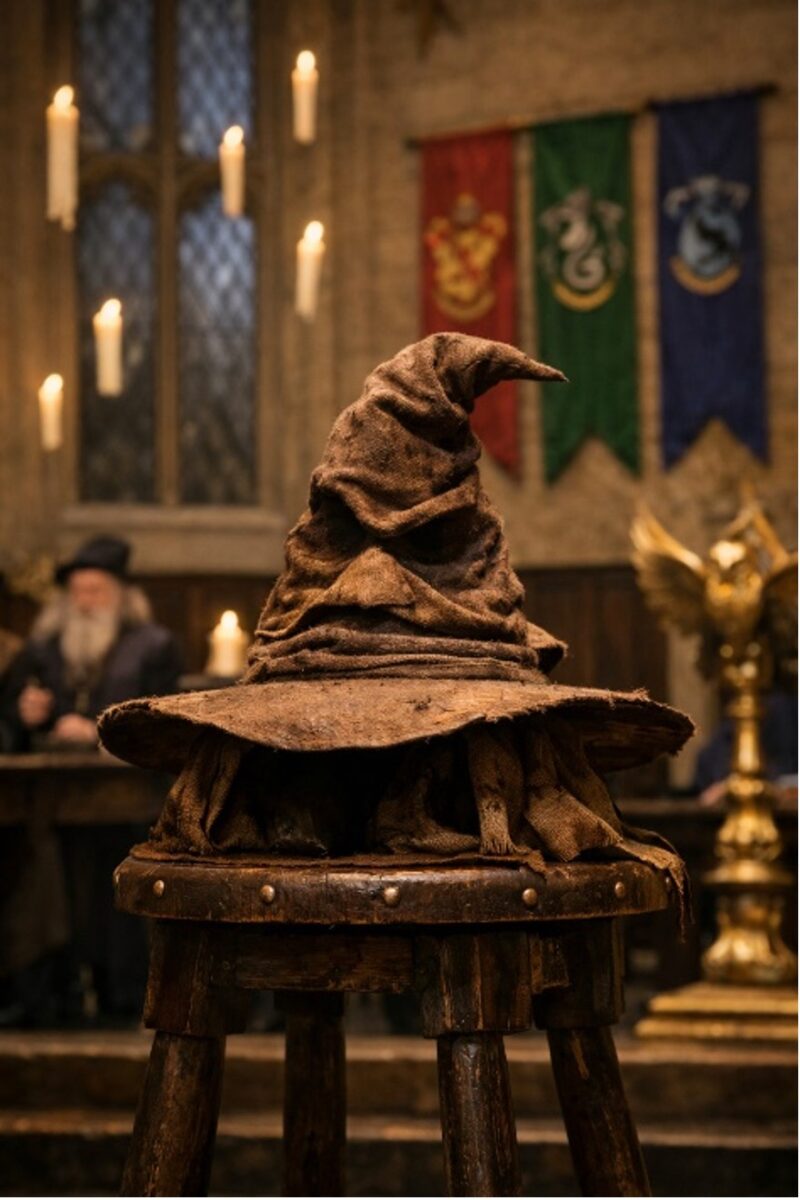
“The day after the sale is like the sorting hats in Hogwarts. Artificial Intelligence is behind the curtain. The herd gets divided into groups of 10. Each group gets assigned to a barn. Ten different barns, each with three employees – a trainer, a second trainer, and a groom.”
“I don’t get to pick my trainer?”
“Nope. Your trainer, vet, and blacksmith are all employed by the corporation. You only get to choose your horse and follow the colt when the competition begins. Individual racing is like sire stakes racing, except you never race against any horse in your barn. Over the season, you race your colt for points. The top point getters get a ticket to the finals with a $100,000 purse.”
“Nothing revolutionary in that. Trey, I expected more insanity from you.”
“Let me meet your expectations. The weekly races will always take place on Friday, 10 races with fields of five, a gentleman’s start, and no starting car. The twist is that there will also be season-long team competition.”
“That’s more like you, going off the rails towards crazy town.”
“Not really. Think about this: in college and high school, individual sports like golf, tennis, bowling, and track compete under a sort of dual eligibility. Players played for themselves but also for their team. Sports were my job, so I know how this works.”
“That was like 20 years ago.”
“Doesn’t matter; it’s a good system. A tennis player can win the league individual championship and be a member of a team that might win the team championships. Same with a golf team. Ten players make the roster. When the matches begin, only five players compete against the other team’s players. At the end of the season and all the matches, aggregate scores determine the winning team. A dual system like this, with a league championship, is the goal for this new racing concept.”
“What about the other five players on your team? They aren’t playing.”
“True, it is competition. There are no free passes in serious sports. This league is not one where everyone gets a participation badge. Players must perform, but bench players keep practicing, trying to climb into the starting five. It’s a long season. Players get sick, they get hurt, they need rest, they underperform, and I always shuffled my lineup to get those five, seven, eight players into matches. On off days, we have inner-squad competitions. Team situations make sports fun, bonding, and friendship happen.”
“Most people who buy horses are lone wolves.”
“That’s old thinking. More and more groups buy yearlings, not only to cut costs but also to have friends to share the emotional ride. Without a friend or two along for the ride, I would have been out of the game a long time ago.”
“That’s true, we had some good times as partners.”
“Sports aren’t always about winning. One of my teams lost almost every time we played. However, one individual was great (in fact, they won the state championship). For that excellent player, being part of a team made the experience richer. For the other nine players on the team, even the 10th player who never played a match, they will never forget the thrill of being on that team.”
“And you think you could use this system in horse racing?”
“I do. You should know by now that showing extreme confidence for no apparent reason is how I roll.”
“So where do the trainers and grooms come from? Ten barns, that’s 30 people. They need to get paid.”
“The problem will not be finding employees; it will be selecting people of impeccable ethics and enthusiasm. I’m guessing horsepeople from Cal Expo, Pompano, Chicago, Freehold, Northville Downs, or Frazier Downs who are recently on the move or unemployed will find interest in a steady job doing what they love in a beautiful facility.”
“I can’t get my head around this.”
“Oh, it gets worse, next week I’m tossing out nudity and appointing you to the board of directors, asking you to make a big decision.”
Stay on top of all harness racing news.
Join the HRU mailing list, free.



