





Harness racing’s gamble on Gordon Waterstone paid off
by Murray Brown
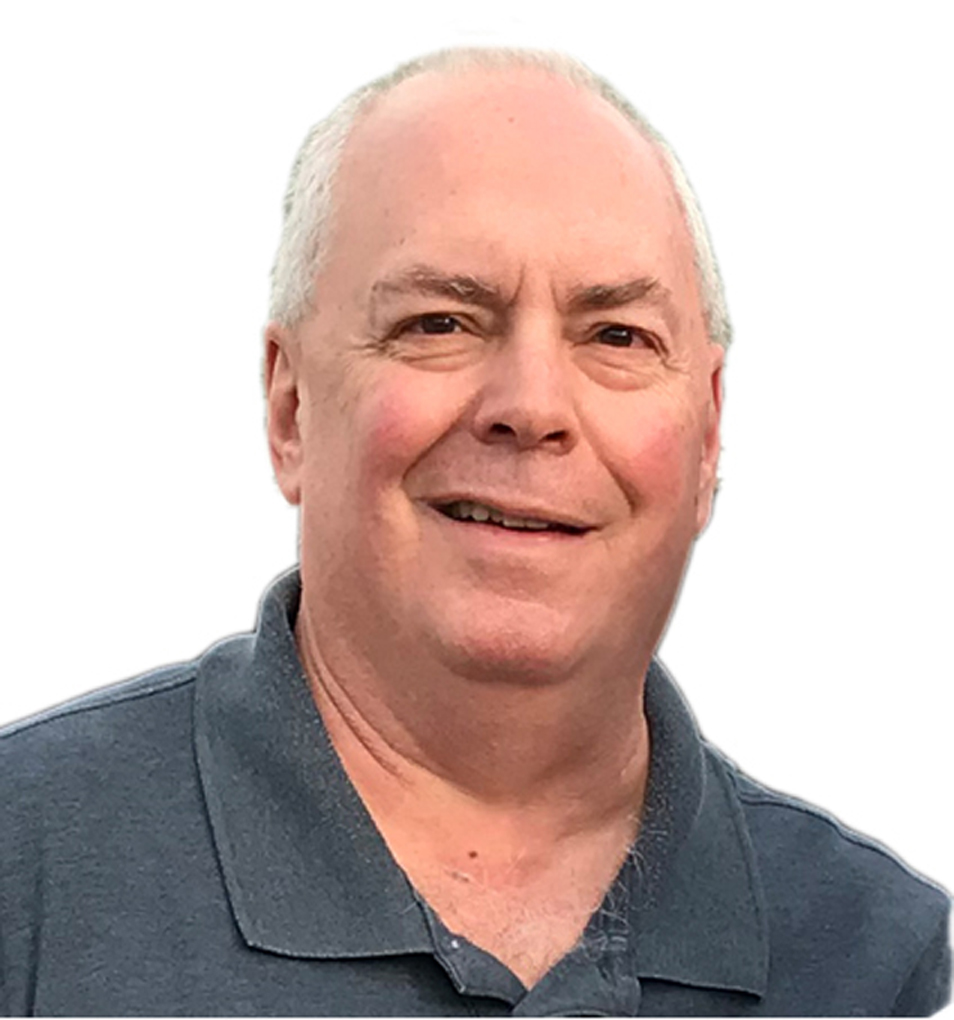
Gordon Waterstone has always been what he calls extremely lucky and a “player.”
“I come from a whole line of gamblers,” Waterstone said. “My dad loved the horses, but thoroughbreds. I had an uncle who was among the first to arrange junkets to Las Vegas. I couldn’t go to the flats during the day, so I went to the harness races at night. I felt that my parents would disapprove. So, I told them I was going bowling. I eventually got found out. My dad said it was alright, he completely understood.
“In the interim, I went to school at Michigan State. After a couple of years there I decided it wasn’t for me. I got a job with a paint company, but I hated the work. That’s where luck first stepped in. A fellow that I knew named Frank Slisinger was an assistant to Greg Magreta, the PR director at Hazel Park. He was leaving and suggested me for the job. ‘Really?’ I said. ‘I’d work in harness racing and actually get paid for doing it?’ Naturally, I jumped at the opportunity. It was doubly fortuitous for me. I wouldn’t be working at the paint company and I’d be doing something which I loved.
“I was 25 years old. I became Greg Magreta’s assistant. What did I know about publicity? Nothing or pretty close to nothing. What experience did I have? Absolutely none. But I figured if Greg was willing to take a chance on me that I’d learn while working and doing anything he wanted me to do. That was prophetic. At various times I’ve done just about everything there was to do at a harness track. It included but wasn’t limited to publicity, program director, promotion, simulcast director, mutuel manager and producing a TV show. I even made and sold a tip sheet for a couple years which would come close to landing me in hot water.”
Let’s start with that. What happened?
“It was totally innocent on my part. There were two races where I liked two horses that were pretty ‘chalk like’ in trifecta races. I liked them and bet them to win with the rest ‘all’ to finish second and third. As luck would have it, a huge underdog finished third in each race. I collected on both races at big prices, even though I really hadn’t picked the third horse. I was just lucky. I was asked by racing commission stewards why I hadn’t picked the third horse on the tip sheet, yet came up with the winning trifecta. I explained exactly what happened and was absolved of any blame.”
What can you tell us about your early days at Hazel?
“I worked as an assistant to Greg for two years. He then decided to try his hand in the race office. I suppose that I inherited his job. By then, I was probably capable of assuming the position. I had learned a whole lot of what had been previously unknown to me. Greg was a great teacher as was the entire staff at Hazel Park.”
What was it about the Hazel Park experience that you cherished the most?
“If it were just one thing, it would certainly be the many friends I made among the horsemen’s community. I suppose that my position at the track would generally be considered as one in track management, But I made so many friends in the backstretch. And we had a full backstretch back then. Ultimately, I think that those friends and in some cases their children and grandkids, many of whom I am still close with to this day, constitute the most enduring memories of my days at Hazel Park. It was so much fun back in those days. We raced six nights a week and we had wagering more than $1 million regularly on Friday and Saturday nights, and close to it on Mondays. And that was on 10 races nightly and all the money bet on track as simulcasting wasn’t in play then.”
We’ve spoken of the best, what was the worst experience in your years at Hazel Park?
“It undoubtedly was the horrible fire that took place in the backstretch in June 1987 resulting in the loss of 15 horses. Words cannot describe that horrific event. I shudder each time I even think of it. It was ultimately determined that the fire was caused by arson. To my knowledge the perpetrator of that atrocity was never discovered. Ironically, of all the great events held at the track through the years, none generated more publicity than that tragedy.”
If you were asked to pick the single most pleasing achievement during your days there, what would that be?
“Without a doubt that would be that on two separate occasions I received the Michigan Harness Horsemen’s Association’s Achievement Award. Other than my election as a member of the Communicators Hall of Fame, that would be the achievement of which I am most proud.”
Please speak of your installation in the Communicators Hall of Fame.
“I look upon it as a validation of a career well spent. I believe I was honored because of the numerous years spent in various areas of our sport, each one related in some way to bringing my love and enjoyment of it to people, both already immersed in it and hopefully helping to bring some people outside of it into our realm.”
Your work at Hazel Park wasn’t your only job in harness racing was it?
“Far from it. I did publicity and promotional work at Northville Downs and for a short spell I was in the publicity department at Northfield Park. I also helped out on the publicity teams at various Breeders Crown events. I’ve also been privileged to occupy positions in various groups within the industry. Two of the greatest honors I’ve received were in receiving the Allen Finkelson Golden Pen Award from the Harness Publicists Association, pretty good for a kid who didn’t know how to write, and serving a two-year term as president of USHWA, the United States Harness Writers Association.”
From working at harness tracks you went on to a 23-year career as a writer at the Horseman and Fair World. How did that come about?
“In 1998 I was at the Dan Patch Awards Dinner at Dover Downs speaking with Kathy Parker. She was looking for someone to work at the Horseman and Fair World magazine at which she was the managing editor. She asked if I knew anybody who could fill the role. I responded, ‘How about me?’ We ruminated about it for a few weeks. Finally, Kathy pressed me for a decision. She needed someone to fill the post. I vacillated. My dad had passed and I was reluctant to leave my mother. Furthermore, I didn’t know anybody in Lexington, KY.
“I finally took the plunge. I moved to Lexington. I’m still here. I suppose that says something about my feeling about the city. I have made some great friendships in Lexington over the years.”
Am I correct that that one of the great memories of your time with the Horseman was the institution of the Backstretch With Gordon column which still survives, even though the magazine went out of business in 2021?
“It’s been great fun. One day in 2003, Boss Kathy — as I call her — suggested that I go out to The Red Mile and see what I might scout up in terms of a story for the magazine. I did, and I’m still doing it, even though the magazine is no more. My sponsors, Steve and Cindy Stewart, have stayed with me and when the magazine closed and I went to work for the USTA, they picked it up each year as the Grand Circuit approached Lexington. I left the USTA after a couple of years and there was still a demand for me to continue the column and after discussions with the Stewarts, we decided the best choice was to accept Dave Briggs’ offer to appear in Harness Racing Update. I do fear for its future though. There are many who are no longer stabled at The Red Mile. Some have set up their own independent training centers nearby or are planning on stabling at the new training center being built in Versailles. I wonder where my material will come from? However, for the immediate future we are set for this fall, which will be my 23rd year trolling The Red Mile backstretch.”
In addition to your love for harness racing, I believe you have an abiding interest in just about all sports, especially when Michigan teams are involved. Is that correct?
“Yes indeed. It’s a good time to be a Michigan sports fan. The Lions, Tigers, Pistons and Red Wings all have young and very competitive teams. I still bleed green for Michigan State and Big Blue keeps making mincemeat of that ‘team down south’ on an almost yearly basis.”
We began this story mentioning that you are a “player.” You enjoy, as the Brits would say “having a flutter.” What can you tell us about your somewhat regular trips to the haven of gambling in North America, Las Vegas?
“I began going to Vegas in 1986. I’ve gone annually since then, sometimes twice a year. My brother Bill now lives there so I get to visit him, and it’s not only that I enjoy the gambling, which I certainly do, but its more that I love the entire Vegas scene — the restaurants, the shows, the entire atmosphere. If it were only the gambling, you can find gambling to satisfy most just about everywhere nowadays. Actually, in my estimation, it has been the growth of so many alternate forms of wagering that has led to the loss of prominence of horse racing.”
Are the rumors true that you made the big score that most gamblers dream about, in your most recent trip to Las Vegas a couple of weeks ago?
“Let’s just say that I may have come close to having made up for all my losses through the years with that unexpected score.”
Stay on top of all harness racing news.
Join the HRU mailing list, free.