




Answers and questions
by Trey Nosrac
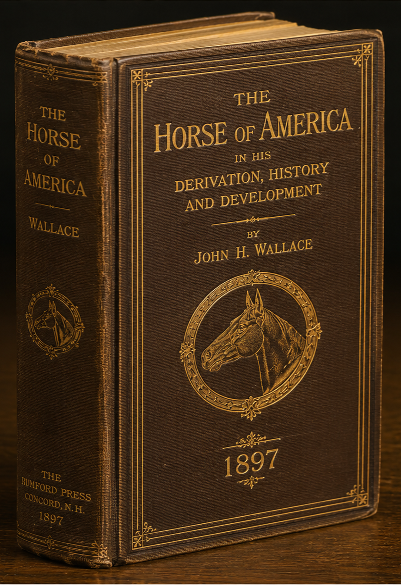
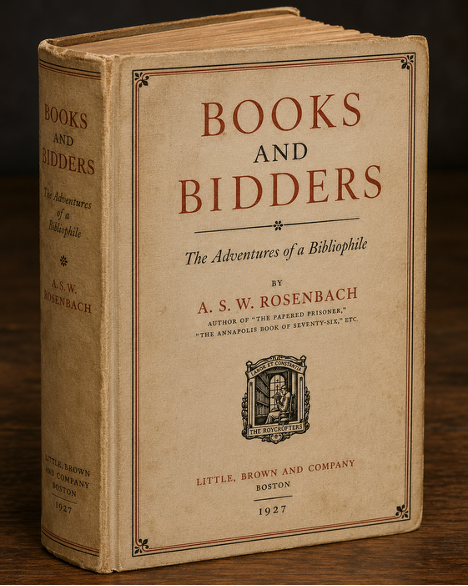
The answer to last week’s puzzle was: rare book collecting, a passion that was especially popular in the United States from the late 1800s through the mid-1900s.
While J.D. Rockefeller, Leland Stanford, C.K.G. Billings, and Cornelius Vanderbilt passionately raised and raced trotting horses, at nearly the same moment in history, Henry Clay Folger, Henry Edward Huntington, J.P. Morgan, and Robert Hoe were building some of the greatest rare-book collections in America. Their libraries became cathedrals of paper and ink. Dealers like A.S.W. Rosenbach became celebrities. Newspapers breathlessly covered the purchase of a Shakespeare First Folio the same way sports pages covered great horse races.
Oddly enough, one could argue that trotting horses and rare books stood nearly neck and neck as America’s most fascinating hobbies during the Gilded Age.
What drove these men? Why would a man spend a fortune pursuing a trotter he could never profit from financially? Why would another spend the same fortune chasing a Shakespeare folio he would never read cover to cover, or a Gutenberg Bible written in German?
Gambling was not the motivation for owning a great trotter. Business was not the reason a man would spend a fortune chasing a Gutenberg Bible that they would never sell.
Perhaps, in some strange way, they believed they were buying proximity to immortality. A great trotting horse and a great rare book share something unusual — both are temporary possessions connected to permanence. A man may own a horse for a few seasons. A collector may possess a manuscript for 20 years. But neither truly owns the thing. They are merely caretakers of history.
That feeling is very different from the modern culture of gambling. Gambling is immediate. Cashing tickets is temporary. Purse money disappears almost as quickly as it arrives. Stewardship is different. Stewardship is generational. You attach yourself to something larger than your own life.
That may explain why old photographs of collectors and horsemen fascinate us. Whether it is Huntington standing among towering bookshelves or Vanderbilt beside a champion trotter, the expression is often remarkably similar. Pride, certainly, but also reverence.
There may only be one Gutenberg Bible. There are only a few hundred First Folios. There will only be one Hambletonian champion in 2026. Scarcity creates emotional gravity. And perhaps that explains why these passions are so intense among both the wealthy and ordinary people alike. Humans seem drawn toward things that feel permanent in a temporary world.
Perhaps it is as simple as this: Deep down, we all want to be part of a story.
That is why gambling alone can never sustain a sport. Sitting in a car while hoping for an exacta box to hit or sweating an over-under wager on an NBA game does not create permanence. None of it creates mythology.
Nobody remembers those moments. But people remember Vanderbilt, Huntington, Lou Dillon, Dan Patch, Greyhound, and Hambletonian champions. The collector and the horseman leave fingerprints on history because their passions produce narratives more valuable than money.
Perhaps that is the danger facing modern harness racing, and maybe the entire modern world. We have become obsessed with economics while starving the mythology. The big picture seems to be passe. In our sport, we endlessly discuss purse structures, signal fees, casino subsidies, and survival strategies while failing to consider that the true fuel of every enduring sport or hobby is emotional attachment.
The great bibliophiles and the great horsemen may have been chasing the same dream – to place their hands on something extraordinary for a moment, and for just a little while, to become part of its story.
Stay on top of all harness racing news.
Join the HRU mailing list, free.